
Fontainebleau
A royal château and state forest, under an hour from Paris.
Pick-up and destination addresses are prefilled: simply complete the date, time and passenger details.
The château, a royal residence for eight centuries
A royal and later imperial residence from the twelfth to the nineteenth century, the Château de Fontainebleau was home to almost every French sovereign, from Louis VII to Napoleon III, each leaving their architectural mark. Less well known to international visitors than Versailles, it has nonetheless been a UNESCO World Heritage Site since 1981.
The horseshoe staircase in the Cour des Adieux, where Napoleon I bade farewell to the Imperial Guard before leaving for Elba in 1814, is one of the most photographed features of the estate and a place steeped in history for enthusiasts of the Napoleonic era.
The ballroom, more than 30 metres long and completed under Henri II, and Napoleon I's apartments, preserved in their original state, complete a visit that usually takes an hour and a half to two hours, depending on your pace.
The Napoleon I Museum, housed in part of the apartments, displays a collection of personal belongings and uniforms that rounds off the visit for enthusiasts of the imperial period.
Madame de Maintenon's apartments and the Trinity Chapel, quieter than the grand salons, offer a more discreet glimpse of court life at Fontainebleau.
Book this tour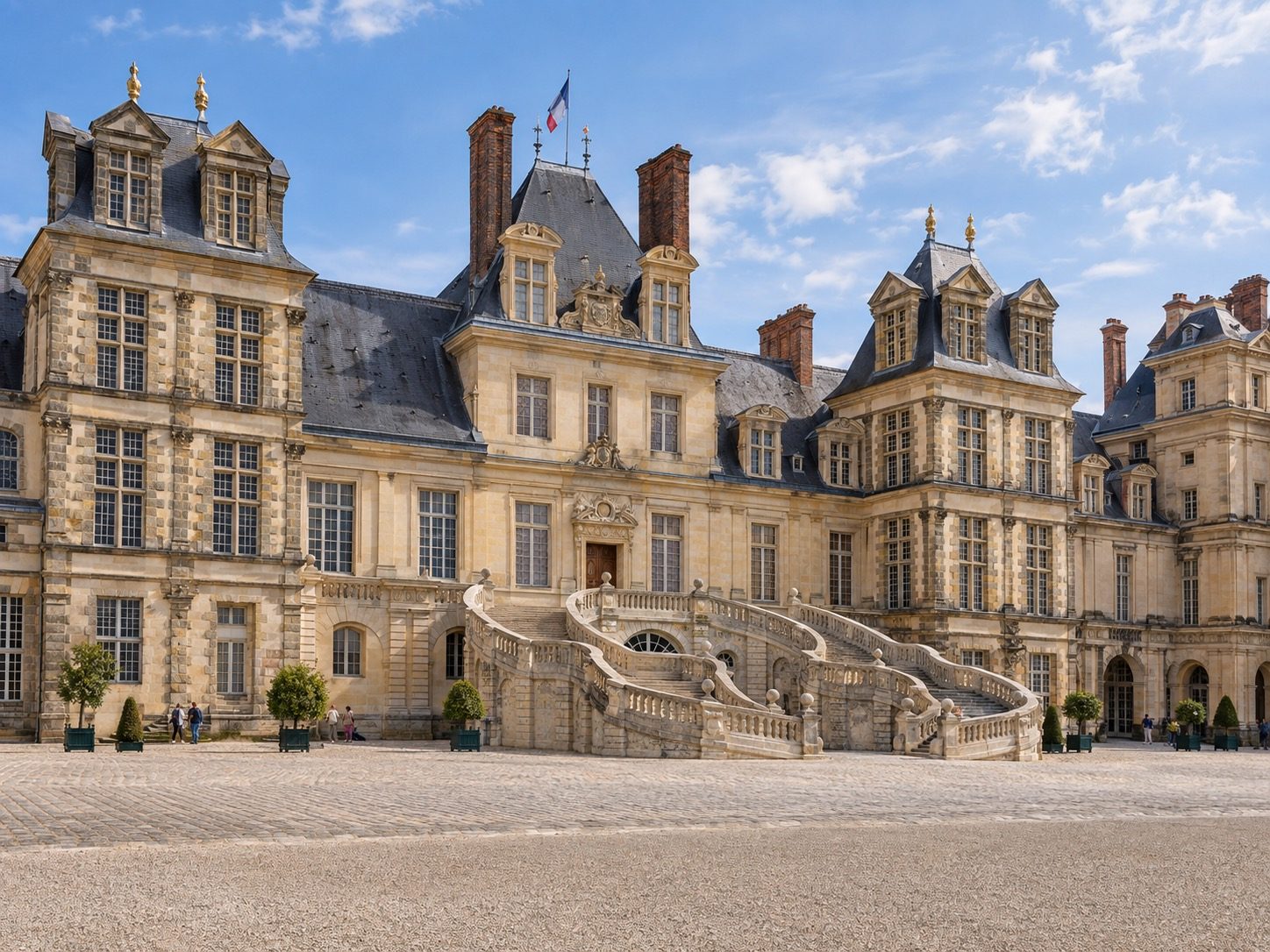
The François I Gallery and the gardens
The François I Gallery, decorated between 1533 and 1539 by Italian artists invited by the king, is regarded as one of the founding statements of the French Renaissance, combining frescoes, stucco and wood panelling in a style that would shape the kingdom's decorative arts for years to come.
The English Garden, laid out in the early nineteenth century around the spring that gave the estate its name, offers a more intimate stroll than the great formal gardens of Versailles, with its century-old trees and irregular layout inspired by British landscape gardens.
The Carp Pond, where sovereigns once came to fish and go boating, borders the Great Parterre and makes a pleasant stop between the château visit and setting off into the surrounding forest.
The Parterre, one of the largest surviving formal French gardens in Europe, stretches out in front of the château wing and offers an open view over the whole estate from its central paths.
The Garden of Diana, more intimate and planted with a variety of species, completes the outdoor visit for those who want to linger before heading into the forest.
Get my price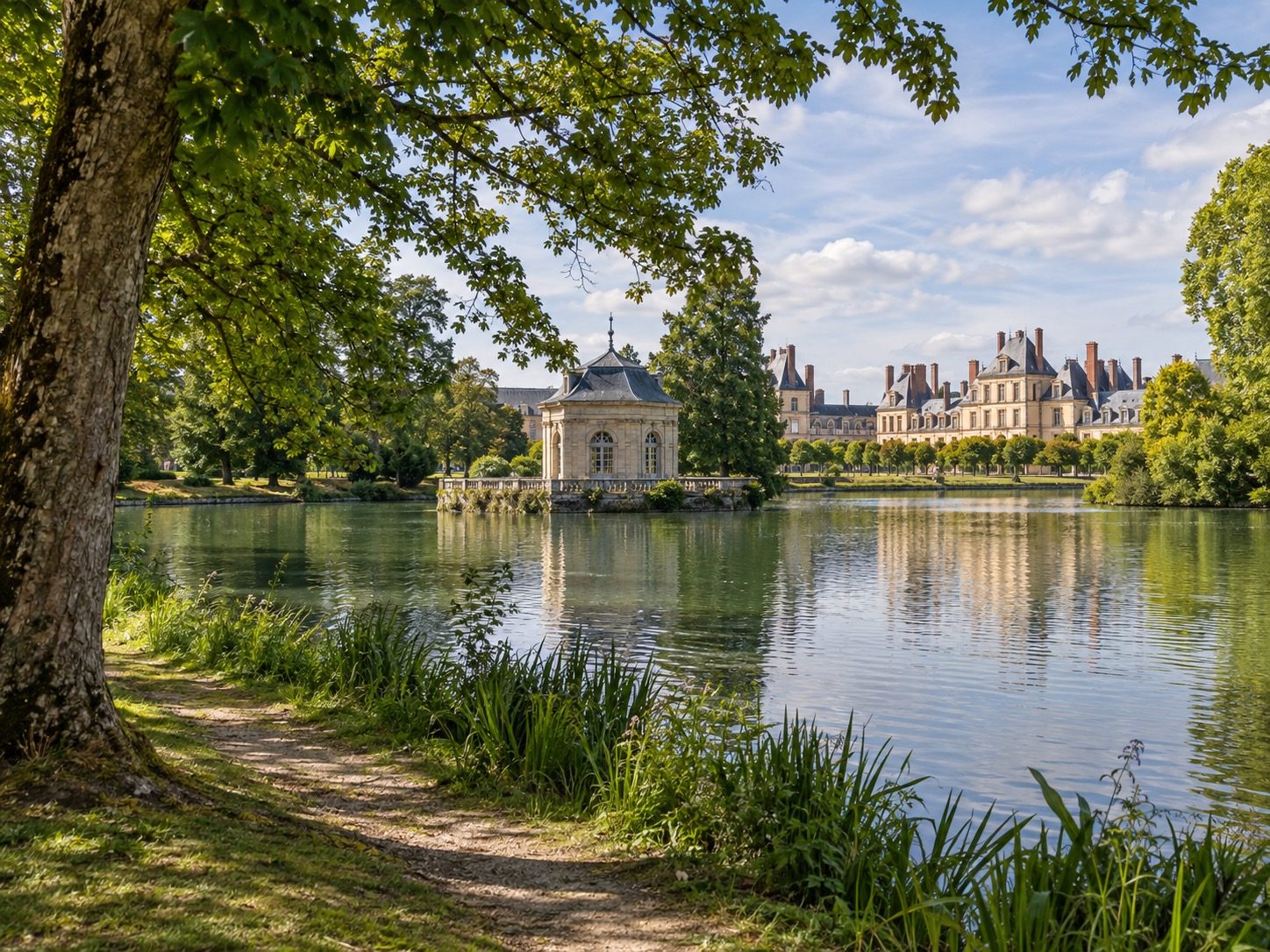
The state forest and its trails
The Forest of Fontainebleau, covering some 22,000 hectares of oaks, pines and sandstone boulders, is world-famous among climbers for its bouldering sites, a form of rope-free climbing practised on the many rocks scattered across the massif.
The Gorges d'Apremont and Rocher Canon are among the most accessible spots for a short walk without special equipment, with views over the surrounding plain from the highest points of the rocky massif.
The waymarked hiking trails, partly inherited from the Barbizon School painters who immortalised the forest in the nineteenth century, offer loops of one to two hours, ideal for a break after visiting the château, with no special preparation needed.
The village of Barbizon, on the edge of the forest, has preserved several painters' studios now turned into small museums, a popular cultural addition after a walk on the forest trails.
The massif's rocks, weathered over time into sometimes astonishing shapes, have inspired generations of artists and remain a favourite training ground for climbers from around the world.
Request a quote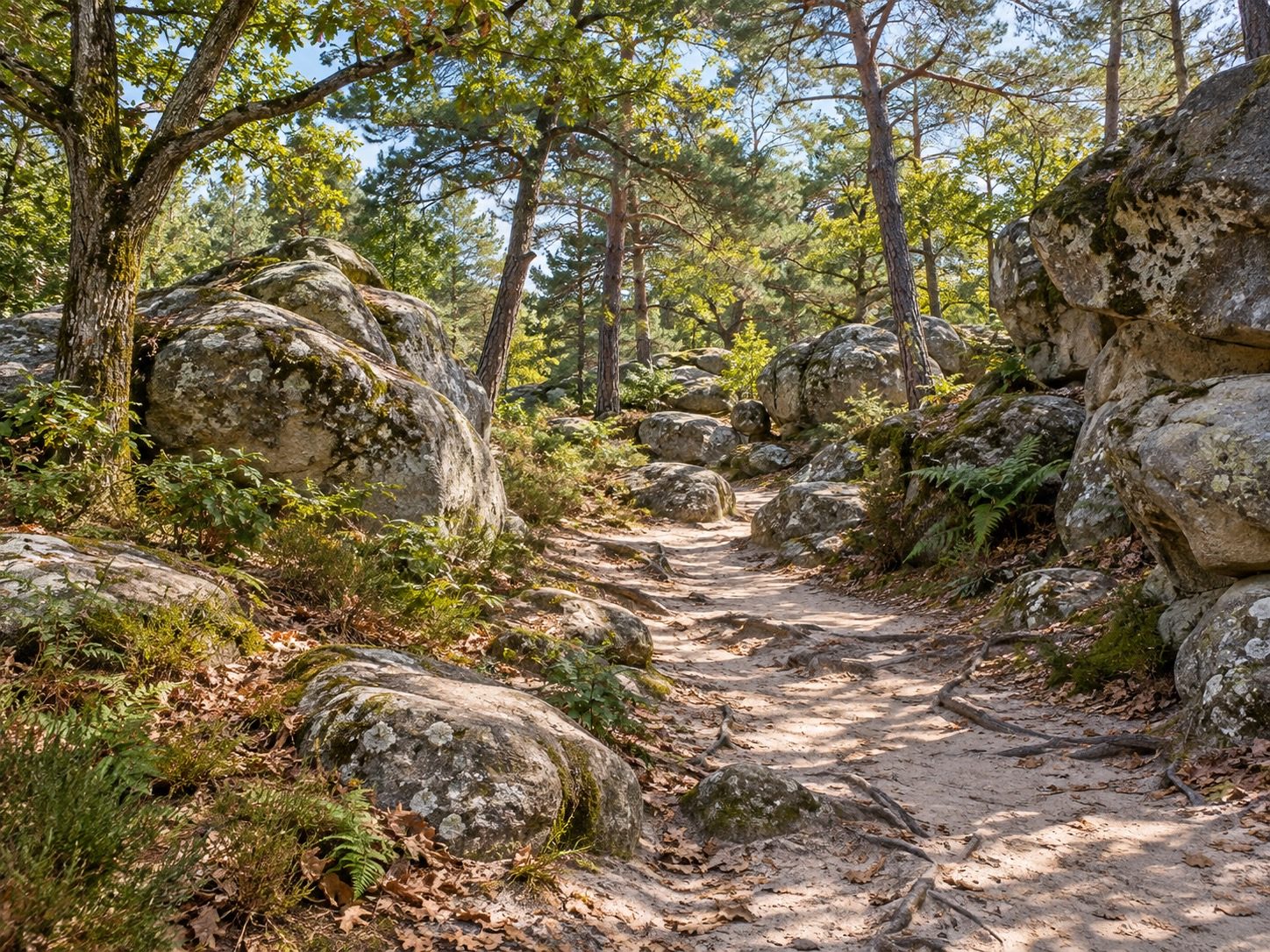
Planning your day with a chauffeur
Fontainebleau lies south-east of Paris, less than an hour's drive away, which makes it feasible as a half-day trip while leaving time to combine the château and the forest on a full day without rushing.
Unlike Versailles, the Château de Fontainebleau usually stays reasonably quiet even in high season, making it a popular alternative for a more peaceful visit to France's royal heritage, with much shorter queues at the entrance.
Your chauffeur drops you at the château, waits during your visit, then drives you to one of the forest entrances for the next part of the programme, before lunch in the centre of Fontainebleau or one of the surrounding villages, as you prefer.
This service is booked for a minimum of 5 hours, at an hourly rate set by the vehicle you choose, for a day with no surprises on the final price.
Fontainebleau combines easily with a stop in the Loire Valley on a multi-day tour, for travellers keen to see more of France's châteaux.
Check availability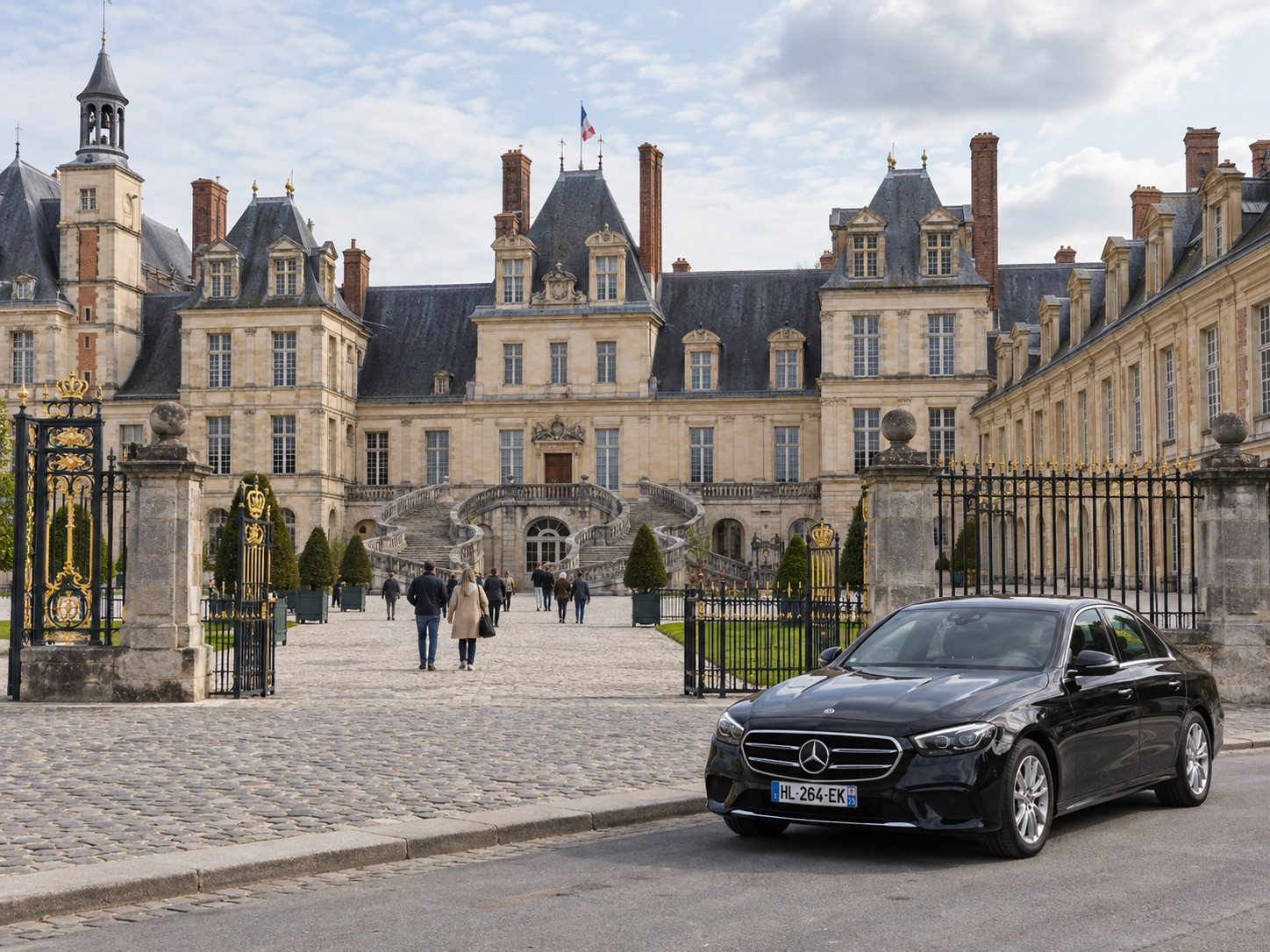


We use audience measurement and advertising cookies (Google, OpenAI) to understand how the site is used and to measure the performance of our ads. You can accept or decline, and change your mind at any time using the “Cookies” link at the bottom of the page.Audience measurement and advertising cookies (Google, OpenAI); you can change your choice at any time. Learn more