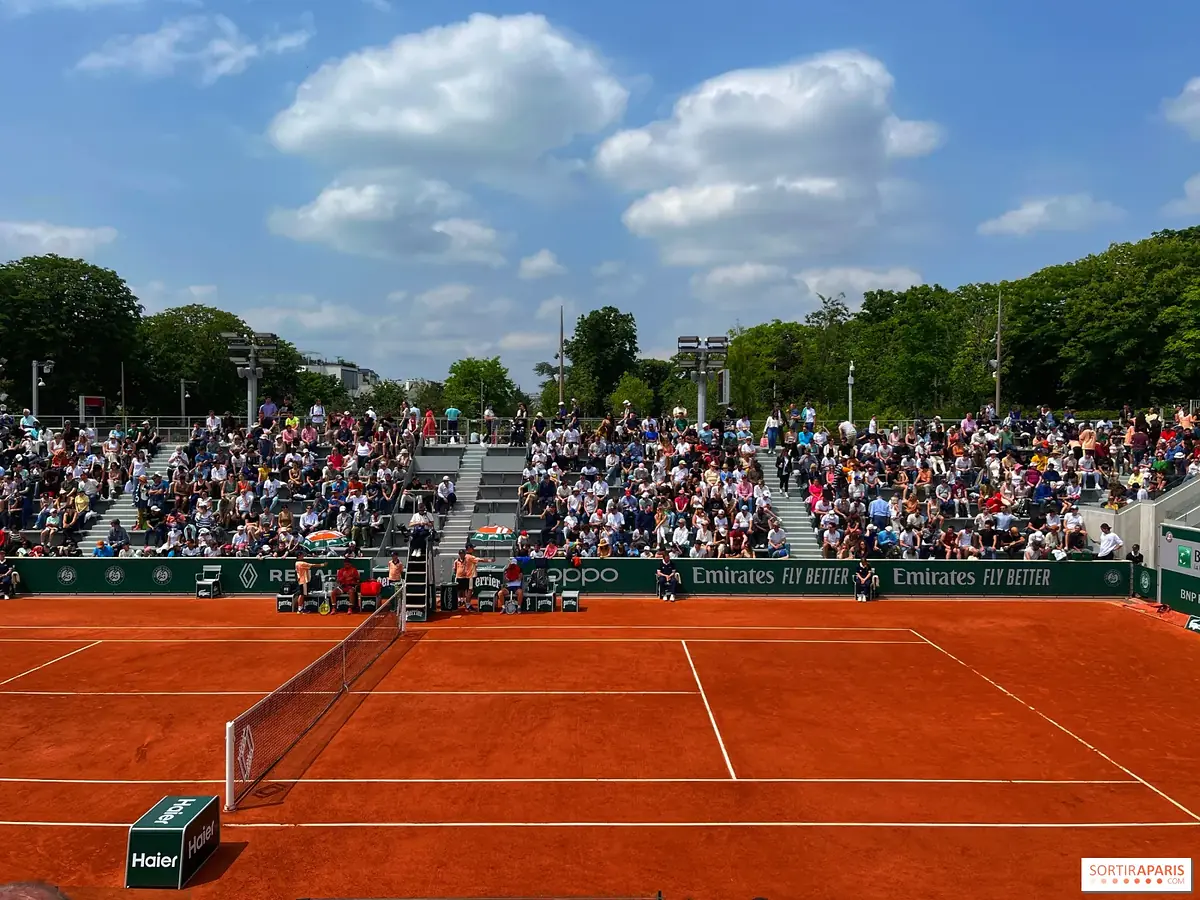
Every year at the end of May and in early June, the Roland-Garros stadium, in the 16th arrondissement at Porte d'Auteuil, hosts the only Grand Slam tournament played on clay, attracting hundreds of thousands of spectators over some fifteen days of competition. This massive influx, concentrated in a relatively small area on the edge of the Bois de Boulogne, creates one of the sharpest peaks in transport demand in the Paris calendar every year.
The stadium's location, bordered by the Bois de Boulogne on one side and dense residential districts of the 16th arrondissement on the other, naturally limits the number of possible access routes. The Périphérique, Porte d'Auteuil itself and the nearby Seine embankments carry most of the traffic in and out throughout the tournament, with particularly marked congestion in the late morning, when most spectators head to the stadium for the first matches of the day.
For spectators arriving from the Paris airports, including the many international visitors this tournament attracts from all over the world, a chauffeur who knows the peak times around Porte d'Auteuil precisely can adjust the departure time to avoid the busiest slots, especially on the days of the final rounds, when attendance peaks.
Roland-Garros ticketing, organised around several courts in different locations within the complex, notably Court Philippe-Chatrier, Court Suzanne-Lenglen and Court Simonne-Mathieu, directly determines the most relevant drop-off point depending on where your seats are. Giving this information when booking your chauffeur allows a drop-off as close as possible to the entrance for the court concerned, rather than crossing the whole site on foot from a distant access point.
Semi-final and final days, which attract the most media attention and the largest crowds of the tournament, call for separate planning: the streets around the stadium are particularly busy from early afternoon, and the reinforced security for these high-profile days can lead to additional traffic restrictions around the immediate perimeter of the complex.
The tournament's business clients, guests in the official sponsors' hospitality boxes, commercial partners and personalities invited to the VIP areas, create a flow of journeys distinct from that of the general public, with punctuality and discretion requirements comparable to those of other major international sporting events held in the capital.
For these VIP clients, hiring a chauffeur by the day remains the most suitable option: you keep the same chauffeur for the whole programme of the day, from arriving at the stadium in the early afternoon, through any temporary departures for a business lunch nearby, to returning in the evening after the matches, with no new booking for each journey.
The Bois de Boulogne, right next to the Roland-Garros complex, paradoxically offers useful bypass routes for a chauffeur familiar with the area, avoiding some of the most congested roads around the stadium by using routes through the woods that are less used by the general public heading to the tournament.
The tournament lasts nearly three weeks, counting the qualifying week before the two weeks of the main draw, and demand for transport remains high throughout, unlike some more one-off events concentrated on a single weekend. This length means booking ahead is particularly important, especially for weekend days, which traditionally attract the largest crowds.
Hotels in the 16th arrondissement and more widely in western Paris, relatively close to the stadium, see their occupancy rise noticeably throughout the tournament, with international clients often choosing them to limit their daily journey to Roland-Garros, which further increases the pressure on local transport during this period.
For spectators combining the tournament with other business or tourist commitments in the capital during the same week, the journeys to Roland-Garros and the other trips planned in Paris are best coordinated together at the initial booking, allowing a coherent programme with no dead time or last-minute improvisation between two different kinds of engagement.
The tournament's history, played on this site since 1928, partly explains the special affection tennis fans around the world have for it and the strong heritage dimension of the venue itself, beyond the competition alone. Every year, alongside the tournament itself, this history attracts visits from enthusiasts who come specifically for the atmosphere and history of the place, adding a further layer of visitors around the complex.
The weather also plays a significant role in organising journeys during the tournament: matches postponed because of rain, frequent at this time of year in the Paris region, can change scheduled times at the last minute and therefore the transport needs of the spectators concerned, a risk that a flexible and responsive chauffeur absorbs more easily than a conventional taxi booked journey by journey.
Restaurants in the 16th arrondissement, particularly around Porte de Passy and the Auteuil district, traditionally see more customers during the tournament, as many spectators and VIP guests extend their day with lunch or dinner nearby before or after the matches, creating short but frequent journeys between the stadium and these restaurants throughout the day.
For any booking during Roland-Garros, giving us from the first contact the exact day of your visit, the location of your seats and any other commitments planned for the day allows our teams to organise your transport as far ahead as possible, taking into account the traffic specifics of each day of the tournament rather than applying the same pattern to the whole fortnight.
Finally, for international visitors discovering Paris during Roland-Garros, it is worth remembering that the tournament takes place in a Paris calendar already busy at this time of late spring, with other cultural and business events keeping transport in the capital under sustained pressure for several weeks in a row, which makes booking ahead all the more worthwhile than organising at the last minute.
The players themselves, accompanied by their coaches, physiotherapists and sometimes their families, are a client group of their own during the tournament, with daily transport needs between their hotel and the training or competition site, at times that depend directly on the order of play, generally announced the evening before. This calls for great responsiveness from the assigned chauffeur, able to adapt to a schedule that changes day by day according to results and progress through the draw.
The hospitality areas set up by the tournament's official partners, often spread over several levels in the complex's permanent and temporary structures, welcome business clients who use the sporting event to hold informal business meetings, a use of the tournament that makes its transport logistics closer to those of a trade fair than of an ordinary public sporting event.
The surrounding Auteuil district, with its quiet residential streets for the rest of the year, undergoes a notable temporary transformation during the tournament, with more security arrangements and regulated parking that noticeably change local traffic habits, a factor that a chauffeur who lives or usually works in western Paris naturally builds into their daily organisation during these two weeks.
For tennis fans combining Roland-Garros with nearby Paris landmarks such as the Bois de Boulogne, the Parc des Princes or the Passy district, a chauffeur available for half a day lets them visit these places one after another with no public transport constraints, making the most of how close these points of interest in the 16th arrondissement are to one another.
The evening events held alongside the tournament by sponsors and partner federations, often in prestigious venues in the 16th arrondissement or central Paris, keep demand for transport going long after the day's matches end, a pattern that makes Roland-Garros logistics similar to those of the Monaco Grand Prix or other major international sporting events, where the competition itself is only part of the programme to be covered.
Finally, the general public ticketing, which for several years has offered day access without an assigned court seat via the site's terraces and food areas, attracts a larger crowd whose arrival and departure times are less predictable than those of the main courts' spectators, an extra variable that a chauffeur used to the tournament builds into their estimate of the peaks to avoid around Porte d'Auteuil.