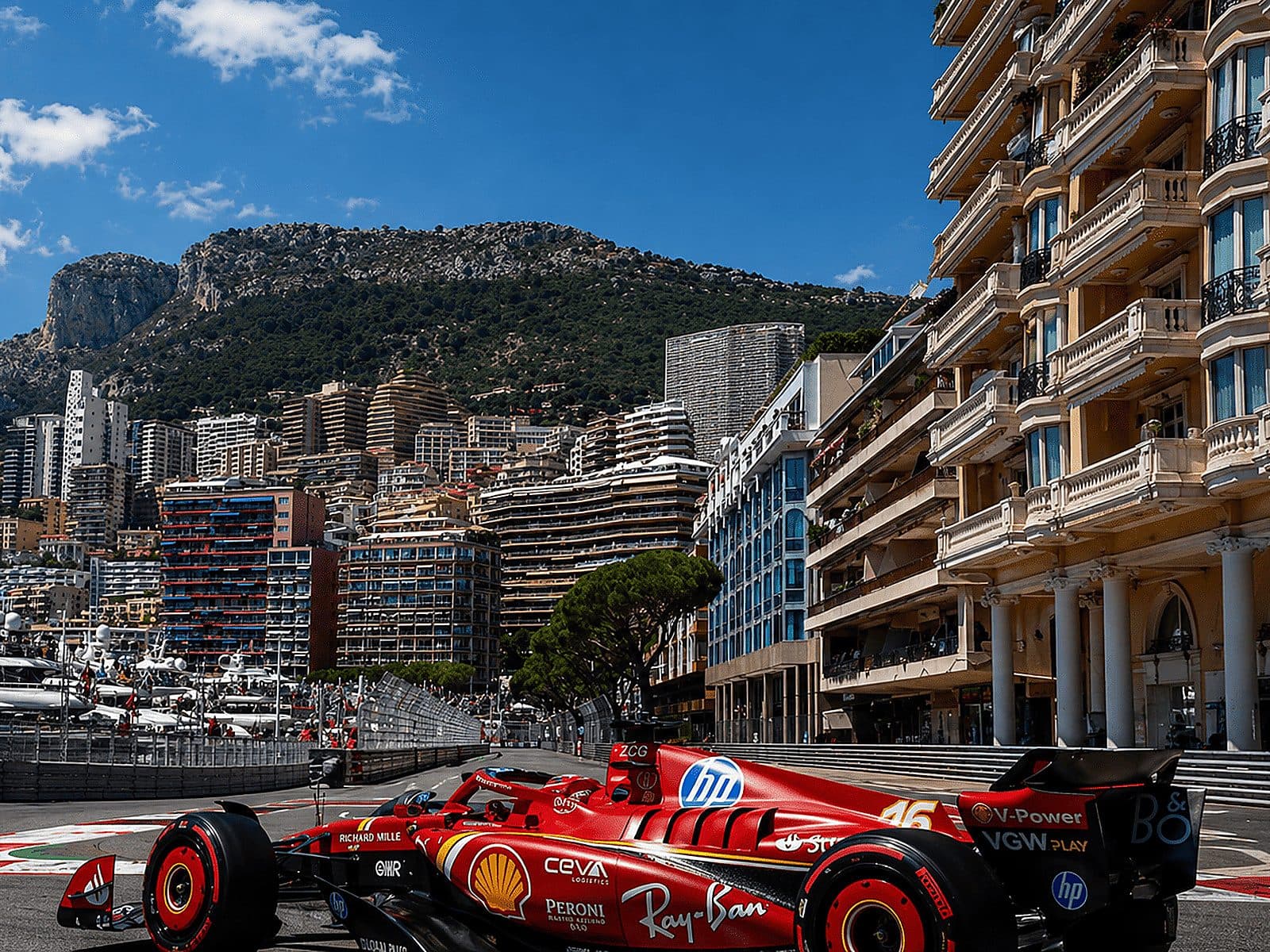
Held every two years by the Automobile Club de Monaco on the same street circuit as the F1 Grand Prix, the Historic Grand Prix of Monaco brings classic racing cars together in front of an audience of enthusiasts, in a more intimate atmosphere than the modern race.
Unlike the Formula 1 Monaco Grand Prix, first held in 1929, the Historic Grand Prix of Monaco is a biennial event held in even-numbered years by the Automobile Club de Monaco on the Principality's same iconic street circuit, created in the 1990s to celebrate the exceptional heritage of the Monaco race and let the cars that shaped its history return to the track in conditions close to their era.
The event brings together historic racing cars divided into several series according to when they were built, from pre-war cars to the turbo Formula 1 cars of the 1980s, via the naturally aspirated single-seaters of the 1960s and 1970s, for sessions on the legendary circuit, attracting collectors, historic teams and motoring enthusiasts from all over the world to admire or drive machines, some of which raced on the same streets in their competitive youth.
The 2026 edition, the fifteenth of this biennial event, announced a tribute to Niki Lauda for the fiftieth anniversary of his Monaco victories in 1975 and 1976, illustrating the commemorative and heritage dimension that fundamentally distinguishes the Historic Grand Prix from its modern counterpart, which is more focused on contemporary sporting spectacle and real-time competition. The sixteenth edition is expected in April or May 2028, on dates still to be confirmed.
Although the audience is more intimate than for the modern Grand Prix, mainly collectors, owners of historic cars and a smaller audience of connoisseurs than the international crowd of the F1 Grand Prix, the traffic constraints in Monaco remain similar: street closures around the circuit and restricted access to the city centre and the Fontvieille district on track days, even if the level of saturation generally remains lower than in May or June.
The race weekend is structured around several track sessions over three days, with each series of cars having its own time slot on the circuit, which creates an alternation of peaks and lulls in attendance different from the more continuous pace of the F1 Grand Prix, with paddocks where collectors and mechanics busy themselves around cars of considerable heritage value.
The atmosphere during the Historic Grand Prix differs noticeably from that of the modern Grand Prix: far from the glitz and intense media buzz of the Formula 1 race, the event cultivates a more hushed and technical atmosphere, appreciated by knowledgeable enthusiasts who come for the mechanical and acoustic authenticity of these cars from another era rather than for the spectacle and social visibility associated with the May or June event.
This heritage dimension is also reflected in the audience along the circuit, often made up of connoisseurs able to recognise the model and era of a car from the sound of its engine before even seeing it, a sharp motoring culture that contrasts with the more general and international audience of the contemporary F1 Grand Prix.
The Automobile Club de Monaco, the historic organiser of both Grands Prix, takes care to maintain this difference in atmosphere while building on the infrastructure and logistical expertise developed for the modern race, which lets the historic edition benefit from a well-oiled organisation despite its biennial frequency and more intimate scale.
Owners of historic cars taking part in the event must comply with strict technical specifications guaranteeing the authenticity of the vehicles entered, some of which raced in the original Grands Prix in previous decades and have undergone meticulous restorations that can take several years before they can return to the track in real racing conditions on the Monaco circuit.
The historic racing car market, which has grown strongly for some twenty years among wealthy collectors around the world, finds in the Historic Grand Prix of Monaco one of its most prestigious showcases, with the event contributing significantly to the value of this particular motoring heritage and bringing to Monaco a specific international clientele, distinct from the Principality's more traditional luxury tourism.
The event's biennial calendar also makes it all the more eagerly awaited by its community of enthusiasts, as the two-year wait between editions builds enthusiasm and attendance for the editions that do take place, a rhythm different from the annual regularity of the Formula 1 Grand Prix but just as firmly established in the international motoring calendar.
LimoAirportGroup adapts its helicopter flights and chauffeur transfers to the precise schedule of this biennial event, with the same attention to circuit closures as for the Formula 1 Grand Prix, while taking into account the different profile of its clients, often less pressed by the constraints of a real-time spectacle but just as demanding about the quality and discretion of the service.
For visitors who want to combine the Historic Grand Prix of Monaco with discovering other attractions of the Principality or the surrounding Riviera, the more relaxed atmosphere of this biennial event offers more flexibility in organising the stay than a Formula 1 Grand Prix, where every minute of the programme is generally dictated by the strict timetable of the competition.
How to organise your transport for this event
- 1Check that the event is taking place that year: it is held only in even-numbered years, unlike the annual Formula 1 Grand Prix.
- 2The helicopter remains the most reliable way to reach Monaco from Nice on closed-circuit track days, even if saturation is generally lower than at the F1 Grand Prix.
- 3The more intimate atmosphere than the F1 Grand Prix generally allows more flexible transport bookings, with less pressure on booking times.
- 4The same closure areas as for the modern Grand Prix apply around the circuit: plan your drop-off point with your chauffeur according to the scheduled track sessions.
- 5If you are a collector or a guest in the paddocks, give your chauffeur your exact session times, as the track programme alternates several series of cars during the day.
Our services for this event
Plan your transport for this event: book online or request a quote, depending on the service.